
The stories behind the Stone Circles
The tide is evocative of religious mysticism – even before the Christian religion, stone circles were used to enclose places used for ritual such as Stonehenge and Avebury in Wiltshire. As we spiral through the history of Stone, there are seven circles:
INVITATIUM – Venite exultemus Domino
The boatman’s life and trades of the town as depicted in boatmen’s folk songs:
When Joules’ old ale was new; Boatie, boatie.
FIRST CIRCLE – an evocation of old Stone (1750) : boat-men, and towns-people.
Stone owes its present prosperity to the existence of the Trent & Mersey Canal. Josiah Wedgwood was the main instigator of the canal. He sought better ways to transport his pottery which was frequently smashed after journeys by pack horse or wagon over un-made roads. In 1766, he called a meeting at the Crown Hotel, Stone at which it was decided to invite James Brindley to build a canal to link the Mersey with the Trent. Work began very soon and reached Stone in 1771.
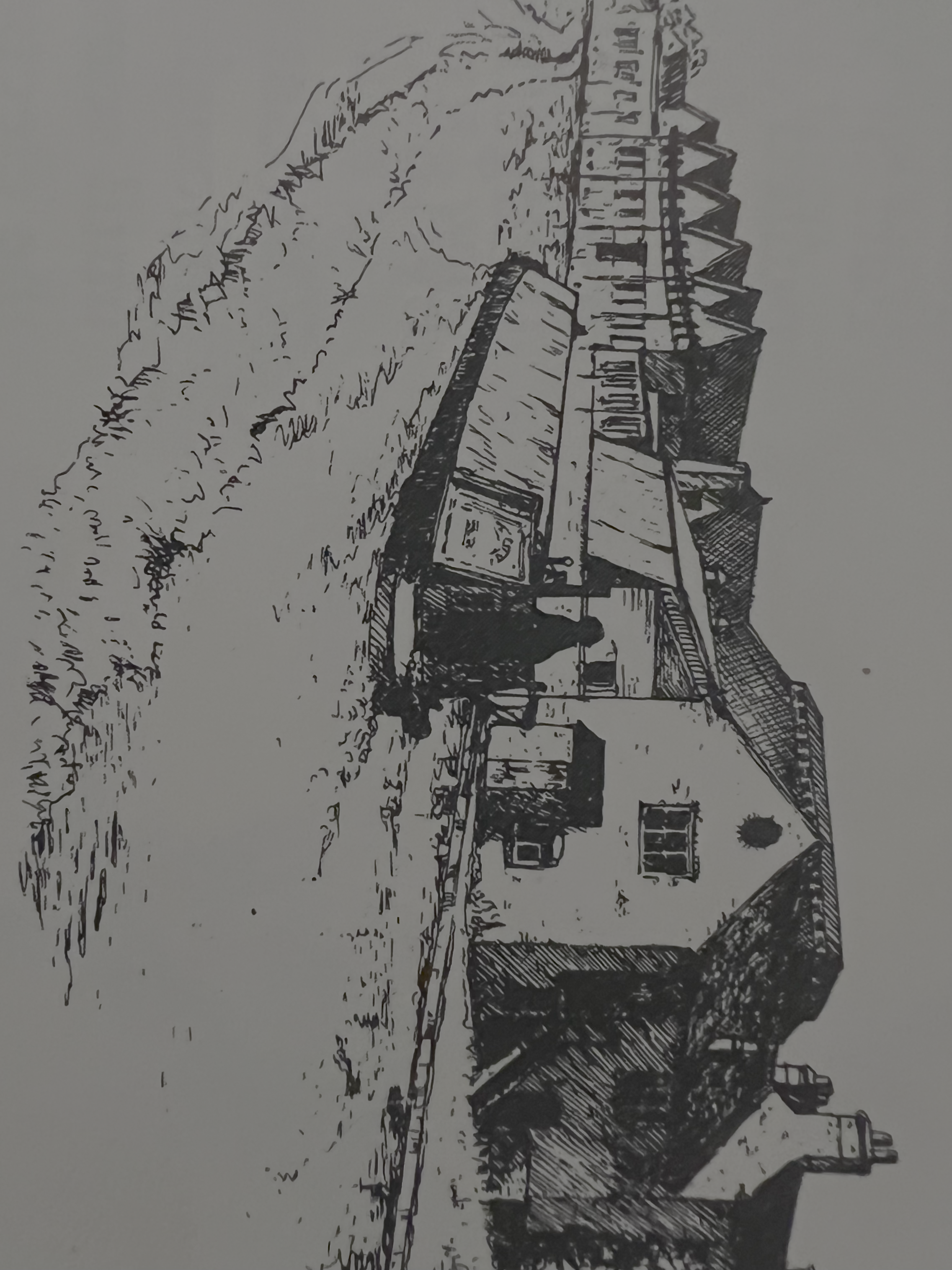
The headquarters of the Trent & Mersey Canal Company was at Westbridge House – it stood near the gates to the present Westbridge Park. When the canal was opened, there was much merry-making. Too much, in fact, for fireworks which were set off caused the lock walls to fall in, so building had to start all over again. Before the advent of the canal, Stone was only a small village. By the turn of the century, it was a thriving town, much prosperity being derived from water-borne trade. Apart from the traditional rural trades, the springs in the town attracted the brewers Joules, and later Bents. They set up breweries near the canal and exported their goods by water. Joules Ale Store is still the main industrial building alongside the canal, but there was also a gas works which received its coal and sent its tar by boat. The foreman’s house is now the Dolce Vita restaurant by the bottom lock.
The canal was dug by ‘navigators’ or ‘navvies’ as they became known. Many were immigrants seeking escape from famine and poverty in Ireland who brought the Catholic religion with them, but kept their faith concealed. This is the period we evoke, with a traditional song describing the various trades of the time.
Boatmen were a nomadic, untutored group of people. The townsfolk disparaged them, ridiculing the limited facilities of the boat cabins where they reared their often numerous families.
SECOND CIRCLE – the abuse of Father Dominic Barberi (1792-1849)
The story of Father Dominic Barberi is told by means of an adaptation of the song which townsmen used to taunt the boat people. The taunting reaches a crescendo as the people chant “Stone him with the stones of Stone” against which the semi-chorus of nuns sings in Latin O quam beati lapides lapidi (Blessed are the stones of Stone) The second circle ends with a plainsong rendition of Father Dominic’s prophecy of the establishment of the convent.
There was a Priory at Stone from the early 12th century. A daughter house to the Augustinian Priory for black canons at Kenilworth is first mentioned in a charter of 1147 by which Robert de Stafford granted considerable spiritual and temporal property to the “church of Stone and the canons living there.” All the Augustinian canons, or black canons as they were called from the colour of their habits, were priests.
In 1251, King Henry III granted the Prior and Convent of Stone the right to a market weekly on Tuesdays with an annual fair on the morrow of St Wulfad the Martyr. There were many casual callers requiring food and lodging; more costly were nobles, often sent by the king, who claimed “corrody”, or free keep during their stay, as the priory was near the King’s Highway.
By 1518, the number and quality of the canons had fallen. Only the Sacrist knew Latin and the sub-prior was described as a drunkard, much given to hunting. It was included in the list of condemned religious houses in 1536 and the buildings and land were sold in 1538.
CATHOLICISM IN STONE
The Catholic Church was disestablished by Henry VIIIth in the 16th century. Throughout the reign of Elizabeth I, the Heveningham family and their descendants the Welds of Aston Hall struggled to keep the Catholic faith alive, keeping a resident priest there. In 1769, the house began to fall into decay, with an occasional Catholic priest in residence, holding services for villagers in the chapel of the hall. Earl St Vincent bought the estate in 1800 and Mr Weld pulled down a large part of the hall, setting aside the remainder for the endowment of a Catholic mission. There were several attempts to establish a religious house, first by Bridgettine nuns in 1809, then by Franciscans in 1818 but by 1831, there was only one secular priest.
The Catholic Emancipation Act was passed in 1829, although its effects were not felt throughout the country until some time later. It was forced on the government by the election of Daniel O’Connell, a catholic, at a by-election in County Clare. Peel and Wellington, the Tory leaders, accepted that Catholics must be allowed to sit at Westminster. The alternative would be civil war in Ireland. The act allowed Catholics to hold any public office except Lord Chancellor but, more significantly, it made both legal and possible the promotion of Catholicism in England.
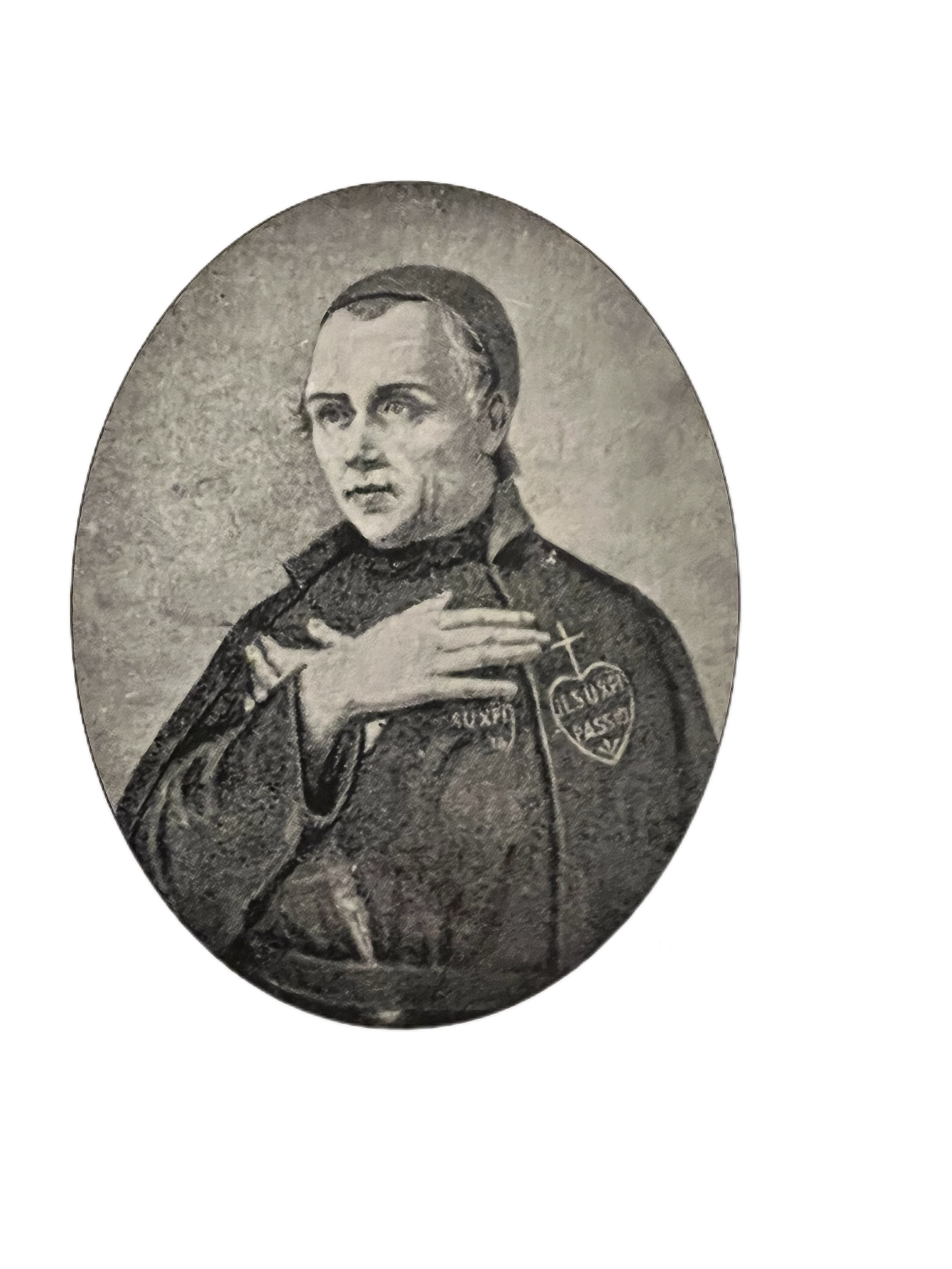
Father DOMINIC BARBERI was born in 1792, the son of poor farmers in Italy. Taking the name of Dominic since his birthday was on the feast of St. Dominic, he joined the Order of Passionists in 1814, becoming eventually a lecturer in theology at Rome and Rector of the Convent of St. Angelo in Lucca. In 1840, Cardinal Wiseman invited him to take charge of the mission at Aston Hall. He had always had a longing to work in England and readily accepted the invitation. He arrived in 1842 and gave the name of St. Michael’s Retreat to the religious house which he opened at Aston.
He extended his activities to Stone, preaching first on a cart in the grounds of what is now St. Dominic’s Convent, then hiring a room in the Crown Hotel, with much assistance from James Beech, the town’s most prominent Catholic. Having little effect at first, he seemed to sense that there would eventually be a revival. When someone lamented the destruction of the Augustinian Priory, Fr. Dominic answered, “Never mind! You will live to see, though I shall not, another Convent and another Church, not at the bottom but at the top of the town!”
He and his fellow Passionists did much work in Aston and Stone with the immigrant Irish workers, refugees from their famine stricken country. Many were taken with fever, so that the local workhouses could not cope. Many were sick and dying, and the local people were afraid to go near. He had to endure insults and ridicule. Boys taunted him openly, imitating his Italian accent and calling him “Demonio!”. He openly wore the cassock and surplice, overt signs of the Catholic faith rarely worn in public at that time. As a result, he was stoned on more than one occasion by youths. Once, he knelt down and picked up the stones, kissed and blessed them. The boys were apparently ashamed and never molested him again.
Mr Beech then set aside a room in his own home, Elmshurst House in what is now known as Margaret Street, and then gave land across the road for a small chapel to be built largely at his expense. This, designed and built by the famous architect Augustus Pugin (who was responsible for the neo-Gothic decoration of the Houses of Parliament) was dedicated to St. Anne and opened in 1844. It continued to serve the Catholic community in Stone until 1853, when Mr Beech gave the chapel and the land to Mother Margaret Hallahan. It is now within the grounds of the convent.
Father Dominic was a key figure in the revival of Catholicism: in 1845 it was he who received one of the leaders of the Oxford movement into the Church of Rome, the Rev. J.H., later Cardinal, Newman. Father Dominic founded the church of St. Michael at Aston, opened in 1849. That year, Father Dominic suffered a heart attack whilst on a train near Pangbourne and was taken to Reading where he died. His body was brought to rest in the chapel of St.Anne at Stone, where large crowds, including many Irish workmen, filed through to pay their last respects. In 1854, the Passionists left Aston, and the remains were removed to their Retreat at Sutton, near St. Helens, His death left the Passionists in Aston in some disarray, with the church still unfinished. He was beatified in 1963.
Third CIRCLE – the Religious Day and Thanks giving for the life of Mother Margaret Hallahan.
It begins with a semi-chorus of nuns singing Vis facere professionem to symbolise the profession and clothing of Mother Margaret. A soloist then sings a thanksgiving based on the words of Mother Margaret for all God has done in answer to her prayers. There follows a plainsong setting of the Constitutions by which she established the rules for the daily conduct of the Order.
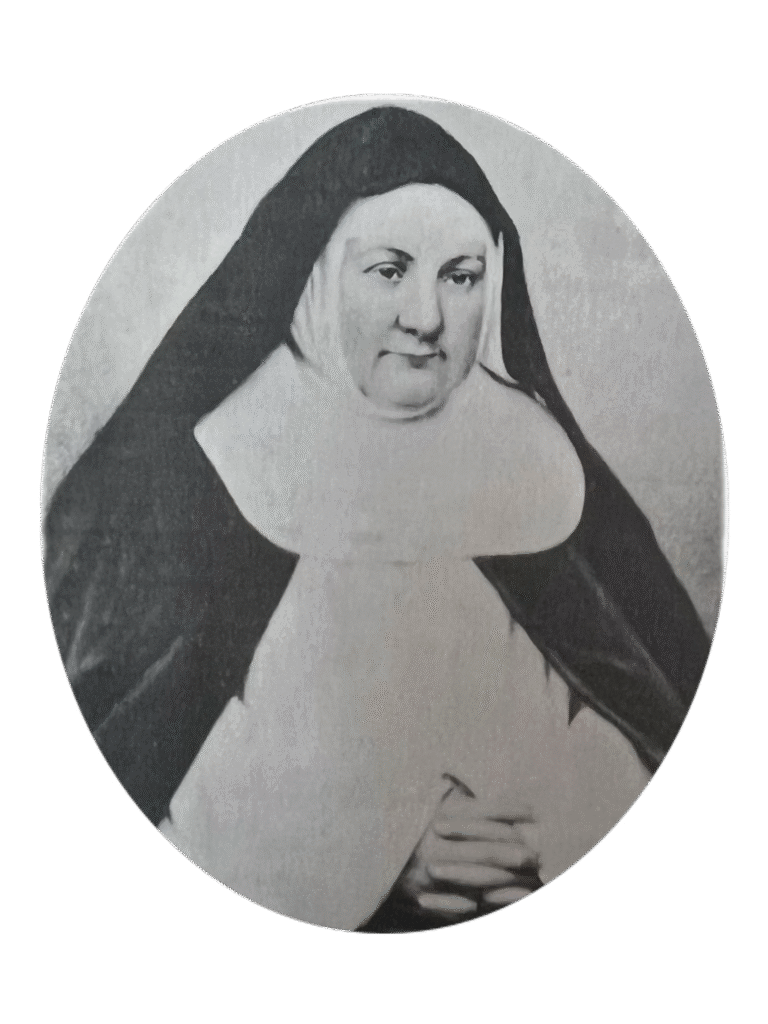
MARGARET HALLAHAN – Mother Margaret of the Mother of God – was born in 1802 and brought up in a poor district of London. She was orphaned at the age of 9, and at 11 began a life of domestic service. In 1825, the family she was working for moved to Bruges in Belgium, where she remained for 15 years. During this time, her life became more focused on religion and she took the vows of the third order of St. Dominic. The rich ornaments used openly in Belgium impressed her and made a sharp contrast to the ‘hole in the corner’ attitude to the Catholie faith then practised in Protestant Britain.
In 1842, when she was forty, she returned to Coventry, where she assisted a parish priest, Dr. Ullathorne, in organising a school for girls. She was also active in the conversion of souls: during her time in Coventry, the number of communicants rose from 50 to 550. She established her first convent with four other Dominican sisters. Eventually, following Ullathorne when nominated Bishop of the Western District, she founded another convent at Clifton, Bristol, and an orphanage at St Marychurch, Torquay. She returned to the Midlands when Ullathore became Bishop of Birmingham, opening a house at Longton in 1850.
It was then that James Beech became acquainted with Mother Margaret’s work. In 1851, he offered her the land at Stone and the convent was built in 1852. This eventually became the mother house of the English Congregation of Dominican Sisters of St. Catherine of Siena, a community which she founded in 1842. In 1857, the Constitution of the Congregation, which she drew up based on the practice among Dominican convents on the continent, was approved by Rome.
This was a time of unrest for the secular community of Stone, with workers uprisings in protest against the introduction of shoe-making machinery which threatened to create unemployment.
The twin interests of Margaret quickly found expression in Stone. Her charity and goodness were unfailing. From the outset, the convent housed a few aged and sick women, the beginnings of the present St. Mary’s Home. As early as 1857, two sisters came during the week to teach at a small school held in St. Anne’s chapel. No sooner was the new parish church completed than the sisters looked to expand their educational work, acquiring the land for the school in Newcastle Road. Eventually, Stone was the mother house to five convents, two schools, four churches and several orphanages and hospitals.
Mother Margaret was distressed at the poverty of altar furnishings in England, and returned more than once to Belgium to find suitable adornings to go with the statue of Our Lady which had been with her since her youthful profession in Bruges. This now stands in the convent library.
On visiting Stoke, she was pained to find the Blessed Sacrament in a pewter ciborium (the covered receptacle which holds the wafers of the Eucharist) and soon set about improving matters.
Of the chapel she wrote: “Oh, my sisters, I cannot tell you what I have felt since! A total want of all things! Our Lord and God in a peter ciborium, gilt a little on the inside! And not one decent thing in the whole place! How can we expect people to be converted? They have nothing to attract them; and how can they believe us when we instruct them in the Real Presence? They may well doubt the faith of Catholics – the Lord of heaven and earth in pewter for the love of us and His creatures using silver for the meanest purposes. I am wearying my beloved Spouse to give me money. We must do something for this place.”
Longton too made a negative impression on her: “I have been through the whole town and it is a range of dust hills; the people themselves tell us it is the fag-end of the Potteries: I think it is the fag-end of the world. Nevertheless, as God has sent us here, we will do what we can for the salvation of these poor, neglected people.”
FOURTH CIRCLE – Stone in the 1850s: hardship on the canal; Mother Margaret’s intervention.
A boatman’s song, The Icy Blast, describes conditions on the canal during a freeze-up. Mother Margaret’s ministrations are evoked by a reprise of the Joules’ old ale theme; the enormity of the effect of the cold on some of the canal folk is movingly portrayed by a lament for a young boatman “wrapped up in tarpaulin and cold as the clay”.
Like Fr. Dominic’s, at first the strange dress worn by the nuns attracted disparaging comment in Stone but they soon won over the hearts of the community, assiduously visiting the homes of the poor and the sick. Mother Margaret’s name became a household word and the sisters were accepted as part of the town. Her kindness extended even to the semi-nomadic boat people on the canal.
One severe winter, frozen in and unable to work and therefore earn money for their keep, the boat people knocked on the convent door for help. Thereafter, Mother Margaret was regularly seen on the canalside, tending the sick and providing comfort for those in distress. The rough natured canal folk came to regard her as a ministering angel.
The convent was built in 1852 and the present church consecrated in 1863, with seating for 400 despite the fact that there were only about 50 Catholic communicants in Stone at the time – an carnest of Mother Margaret’s faith – “God will provide”. The building was designed by Joseph Hansom, designer of Birmingham Town Hall and best known for the design of the Hansom Cab. By the time of her death in 1868, the parish counted 1300 souls.
Like Blessed Dominic Barberi, Mother Margaret was a friend to the principal figures of the Catholic resurgence of the 19th century, such as Cardinal Newman who wrote the words for Elgar’s Dream of Gention. Elgar’s sister joined the order as Sister Mary Reginald. One of Elgar’s batons in black chony is on display in the library. Cardinal Newman came to the convent in 1884 and was entertained by the town’s rifle band.
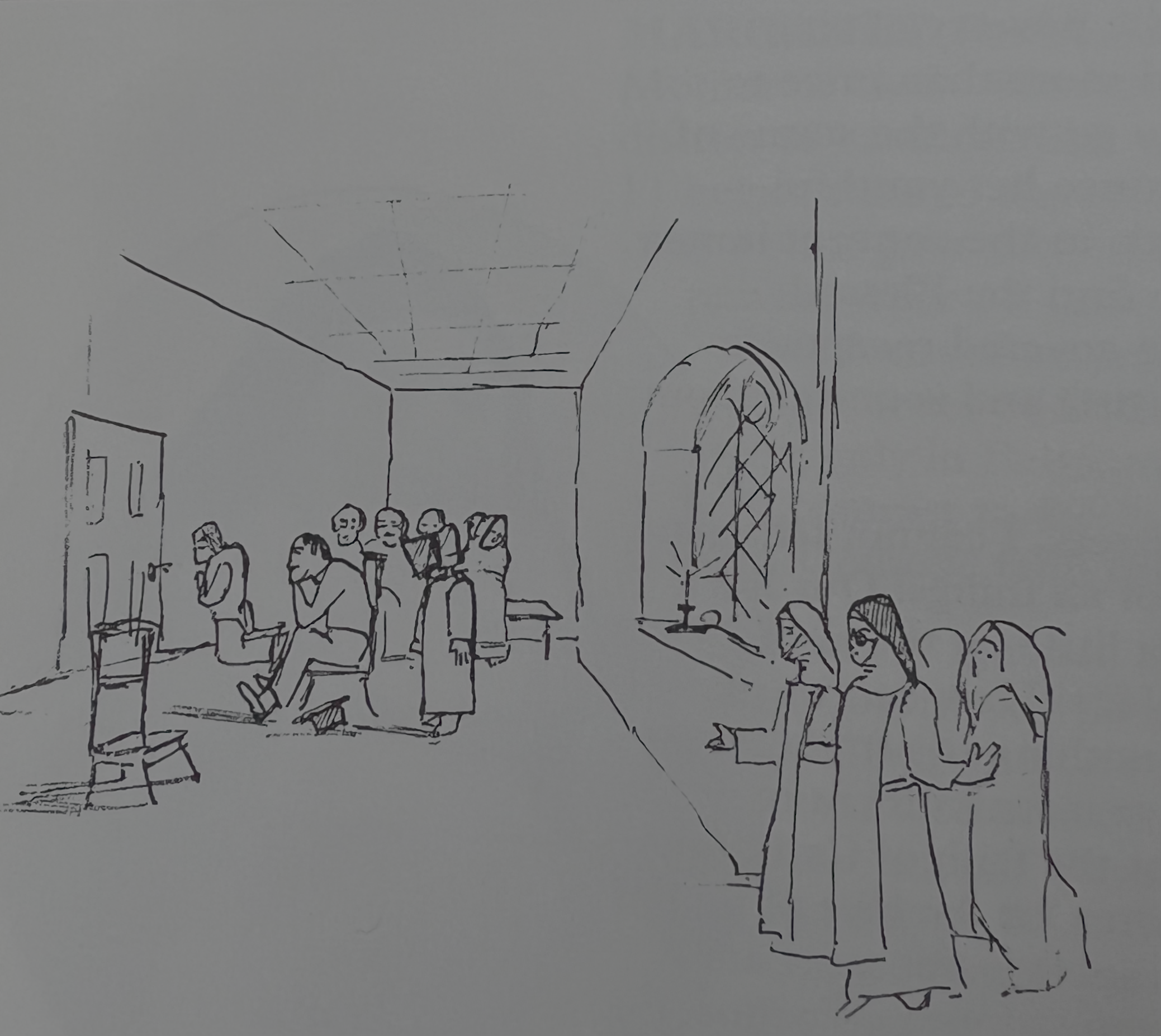
FIFTH CIRCLE – Stone in the early 20th century: the story of some choir ancestors; the first boat engines arrive.
The adventures of Jeremiah Bott, the great-grandfather of one of the choir, are portrayed in another variation of the Joules’ old ale tune, punctuated by comments from the semi-chorus of nuns. Another family story related by one of the sopranos served as the inspiration for the next variations which tell of human frailty in the face of the horrors of the First World War. A wedding reminds the nuns of the words of their betrothal to Christ: Veni, spansa Christi, Another variation tells of the creation of ‘Hovis” in the town and an episode in the life of police Superintendent Gilbride, Shaun’s great-grandfather; this is followed by another boatman’s song, I had a single Bolinder, which imitates the eccentric rhythm of the first marine diesel engine.
As the nuns sing Vespers, the Magnificat moves from Latin, which was used in their services until the sixties, into English to symbolise our arrival in contemporary time.
Most of the members of the choral sociery come from families which have recently moved to Stone. Amongst those who come from more established Stone families, the Botts and the Warrilows can trace their ancestors back to the beginning of the present century. J Warrilow is listed as a farmer at Brassworks Farm in Adie’s Trade Directory of 1904. His ancestors were probably amongst the first to be converted to Catholicism by Fr. Dominic Barberi, their farm is one of the first buildings he would have come across on his way along the towpath from Aston Hall to Stone.
Warrilow’s descendants moved to canalside cottages some time before the outbreak of the First World War. Descendants of both the Bots and the Warrilows worked at Joules brewery, either as draymen or brewers.
Jeremiah Bott, was a well-known Stone character, Reputedly, he could not tolerate being confined indoors. Although he fathered 9 children, he left the responsibility for their upbringing largely to his wife. He frequently wandered abroad in the direction of Moddershall and was often found drunk in the lanes leading there. He was by all accounts a loveable scoundrel who used to gather wild flowers in the lanes and stick them in the broad leather belt that he always wore Walking down the High Street, he would offer these to any lady who took his eye. When his wife lay on her death bed, he was evercome with remorse and made his way to the cottage where she was. Seeking forgiveness, he climbed the stairs to her rect, but she was having none of it. Her last mortal act was to rise from her bed and, giving him a good pash, send him tumbling down the stairs.
Shaun Gilbride’s grandfather was Superintendent Gilbride of the Stone Police. He originated in Northern Ireland where, as a constable in the RUC, he realised that there was little future for a Catholic in the force and came to England in the hope of better prospects. He had a huge bushy beard. On one occasion, an irate defendant in the dock, enraged at the sentence passed upon him, seized Mr Gilbride’s beard and tore out chunks. The latter is supposed to have taken the prisoner round behind the court and “dealt with him”. Nothing more was said.
The first boats were fitted with steam propulsion at the turn of the century but horses were the commonest form of traction in the first two decades of this century. In the 1920s came the introduction of the first semi-
diesel engines, the single cylinder Bolinder. This was a fearsome machine; a few still survive today on historic boats. To start it, a blowlamp had to be applied to heat up the ‘hot tube’. At the right moment, the boatman would kick the huge fly-wheel and the engine would spring to life, continuing with an irregular heart-like beat. If he was unlucky, the fly-wheel would kick back, sometimes breaking an ankle. The engine had no gear box; to reverse, the boatman had to slow the engine down and, when the piston reached top of the stroke, he kicked it backwards, thus reversing the drive. This was a hard-acquired skill, and many gates were damaged as the boatman missed his gear and lunged full tilt into the wood-work.
It was about this time that a miller working in Mill Street invented a new formula for grinding flour and thus ‘Hovis’ was created.
SIXTH CIRCLE – Stone in modern day times: the history of the choral society; its links with choirs abroad.
An arrangement of A hard-working boatman is used to relate the story of the founding of Stone Choral Society. The tune develops to evoke our links with European choirs – a first section features the Zottelmarch, the signature tune of our Belgian friends, and ‘quacking’ reminds us of a drinking episode. The jaunty boatie’s song reappears as we bounce along the roads of the Czech Republic towards the home of Budweiser. Then a recitative based on a fax received from Prerov dramatically announces the disastrous floods there before a final return to the Joules’ old ale theme sets the scene before and after a rehearsal where Patrick Larley’s baton brings order out of chaos.
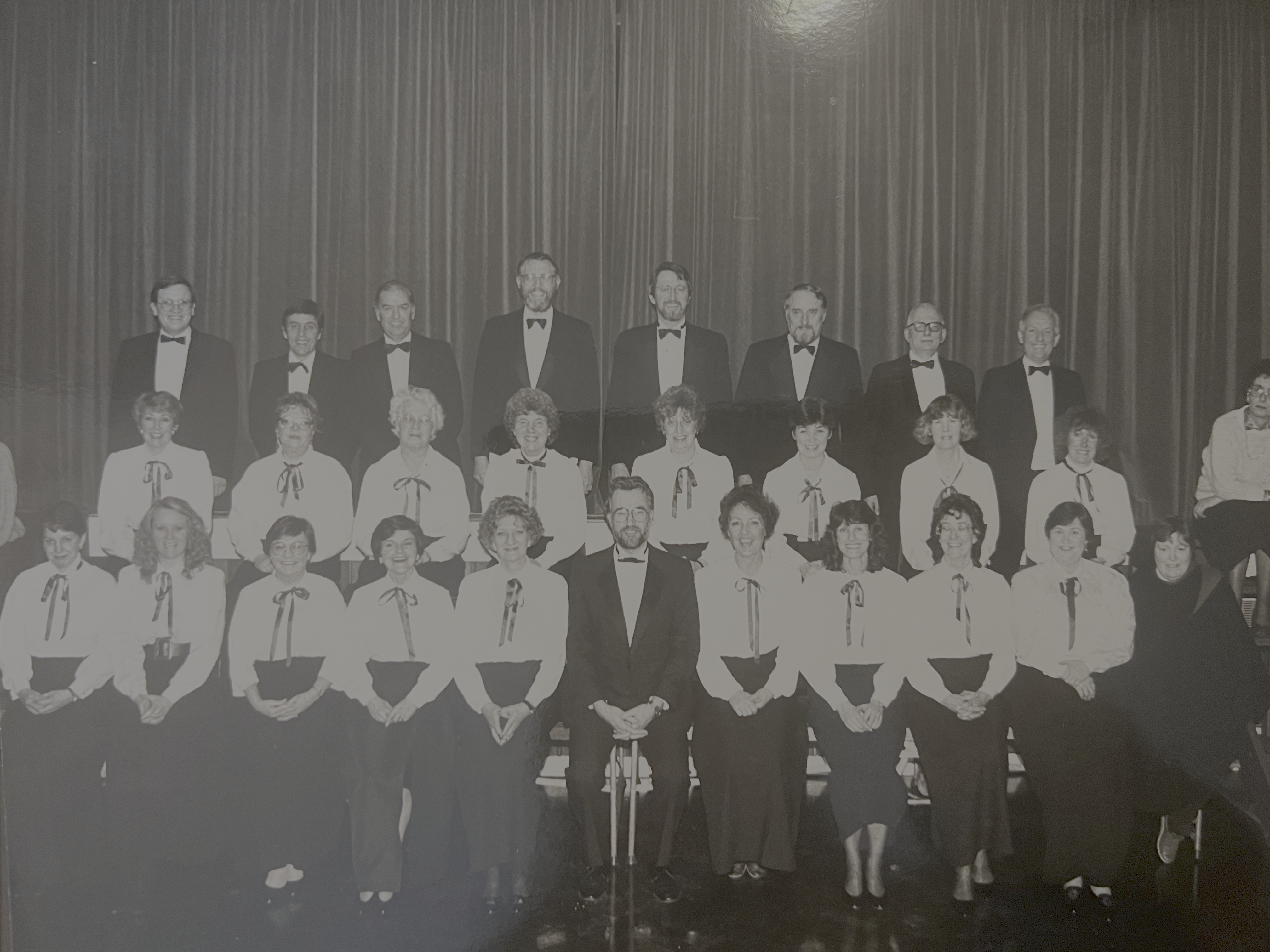
Alrene Wainwright sought the help of a local evening group of Post Office employees who sang at Beattie Hall to augment Alleyne’s School Choir in a performance of Handel’s Messiah. This was the beginning of Stone Choral Society. Since that time, the versatility and quality of singing has developed under several musical directors. There is an active social life as well as many fund-raising activities; there are parties after concerts, workshops, quizzes, barn dances and barbecues.
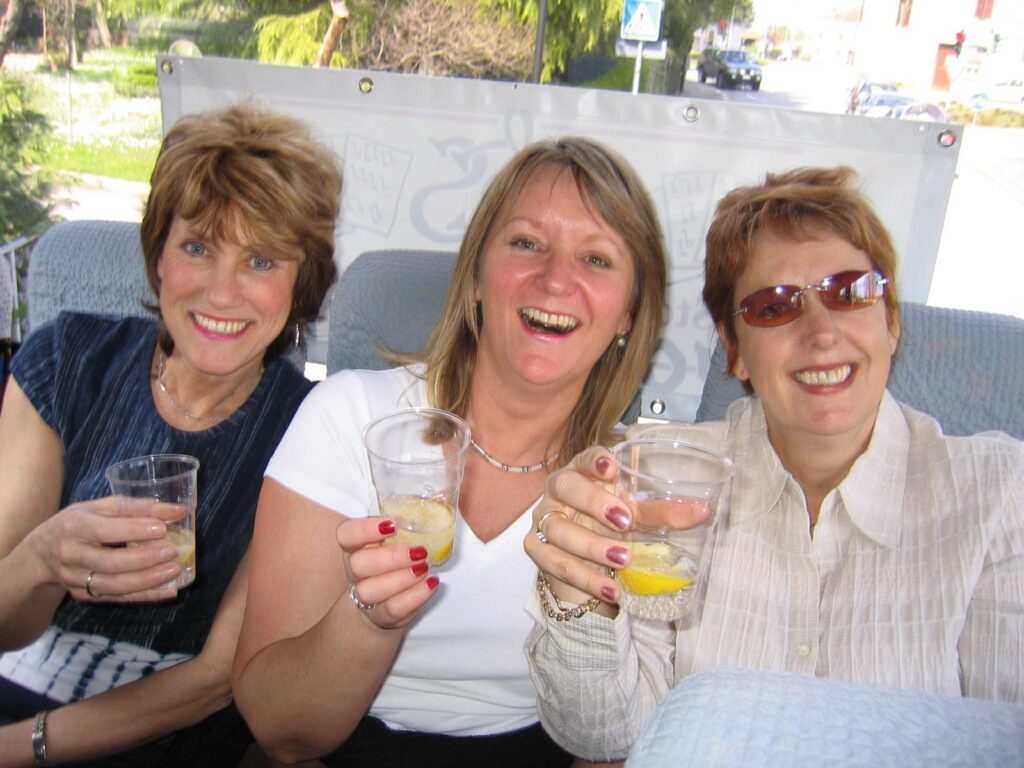
The choir has participated in competitions (Sainsbury’s Choir of the Year and the International Eisteddfod in Llangollen). It has strong links with choirs in Belgium, Austria and the Czech Republic – six visits have been hosted in Stone and four expeditions made to sing abroad. Our friends in Moravia suffered disastrous flooding in the summer of 1997 so we were unable to visit them – but we raised £4000 to ease their plight.
Shaun Gilbride has single handedly upheld the drinking reputation of Stone men abroad. On one of the choir visits to Ostrozobeke, he was challenged to a drinking competition using a strange glass holding about a litre called a “KWAK”; the name comes from the bulbous shape at the bottom which, when the liquid is at a certain angle, produces a quack-like sound. Sean not only defeated the Belgians in sinking 13 kwaks, he was first in the car park next morning ready for the next cultural experience.
SEVENTH CIRCLE – Epilogue: The death of Mother Margaret. The suffering and death of Mother Margaret are recounted by a nun.
Our harmony turns to the peace of Compline with the De profundis and evokes the scene when the convent’s bees circled round the coffin as Mother Margaret’s body lay in the church. The De Profundis dies away to a bee-like hum, a peaceful sleepy resonance as the semi-chorus of nuns sings the recessional antiphon Salve Regina.
“Margaret suffered from painful lumbar abscesses throughout her life and bore much pain. She experienced much agony, born with calm and steadfastness, during her final illness at Stone. She could only find relief by raising herself from her bed using two metal loops to support herself, so that her last days were in fact a kind of crucifixion.” She died on May 11th 1868 and was buried beneath the floor of the Sister’s Chapel. Her influence remains in the mother church of the order which she founded.
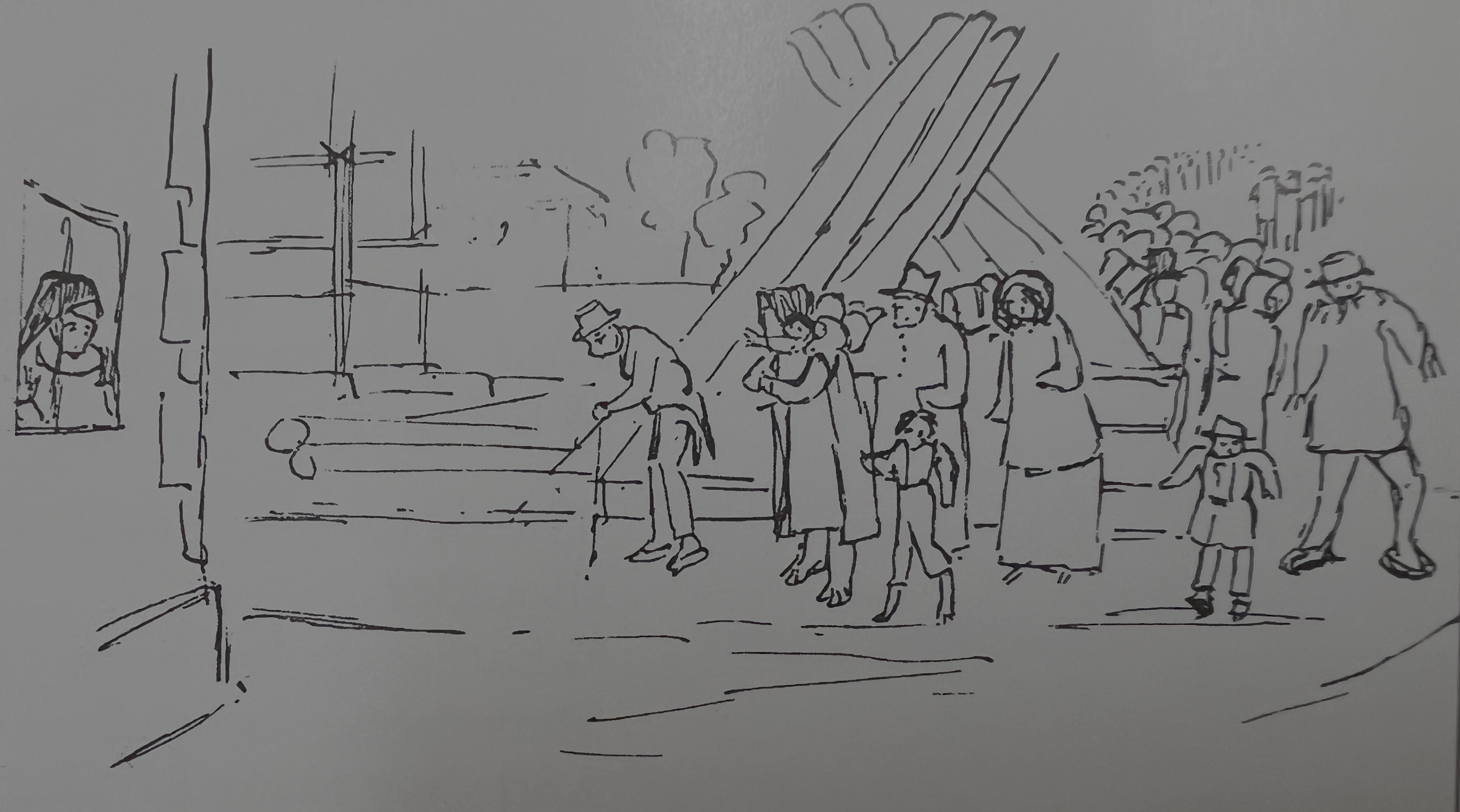
JOULES OLD ALE
Jimmy Gratton was one of the last boatmen on the Caldon Canal, his horse-drawn boat took limestone from Froghall Basin to Kidderminster. He would have stabled his horse overnight at one of the pubs en route and no doubt imbibed a pint or two of Joule’s ale. He also sang the song “When Joule’s old ale was new” which was recorded on Radio Stoke and which inspired much of the music in Stone Circles.
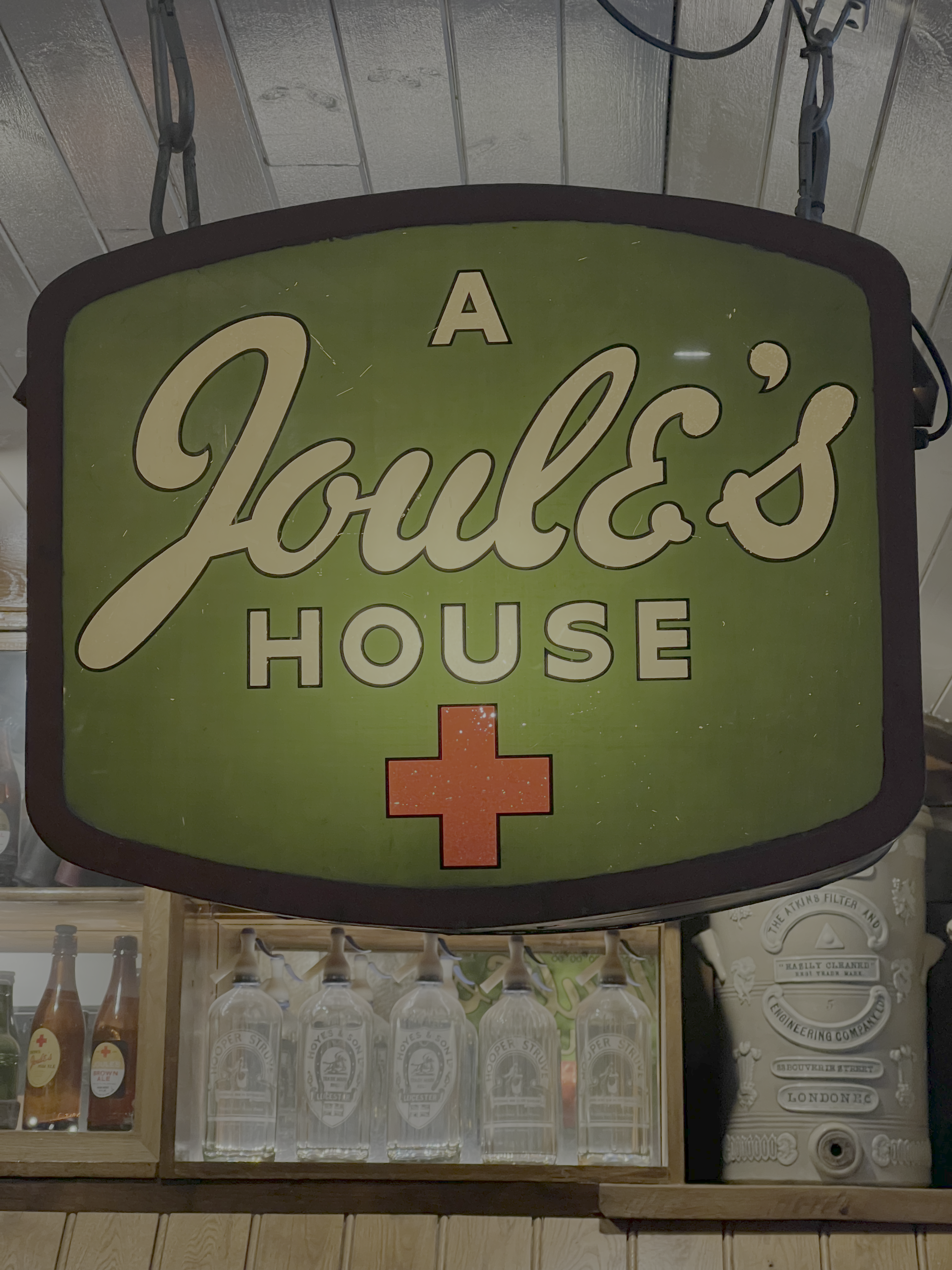
You can still drink the successor to the ‘old ale’ but you will have to wait until next month. According to Joules’ website, it is available in December. A traditional, dark & rich ale is the beer for you to enjoy this Christmas. Joule’s Old No.6 is a dark and brooding winter warmer. Brewed with roasted barley and Munich malt delivering a nutty and roasted fruity flavour. At 4.8% Old No.6 is warming and satisfyingly complex. The winter warmer name, ‘Old No 6’ gives reference to the Joule’s archive and adds some historic Joule’s colour. The original inspiration behind Old Number Six came from an unmarked trial brew of a dark beer, titled No 6. No records exist that this ever went to market and was a likely trial brew for one of the many Joule’s celebration ales. It also happens to be the 6th dedicated brew since the new brewery was built so the beer named itself.
Stone Circles – Libretto
INVITATIUM
Nuns: Venite exultemus Domino
FIRST CIRCLE
Tradesmen & women:
When Joules’ Old Ale was new….
The first come in was a boatman with his tiller over his shoulder
What mon could be more bolder to join this jovial crew?
Ay threw “is tiller upon the floor
And ‘ay swore to “is God as ‘ayd boat no more
When Joules’ Old Ale was new, me lads, when Joules’ Old Ale was new.
The next come in was a brewer with his hogshead over his shoulder
What mon could be more bolder to join this jovial crew?
‘Ay threw “is barrel upon the floor
And ‘ay swore to is God as ayd brew no more
When Joules’ Old Ale was new….
The next come in was a milkmaid, with ‘er milkpails over ‘er shoulder
What lass could be more bolder to join this jovial crew?
Shay threw ‘er buckets upon the floor And shay swore to God as shayd milk no more
When Joules’ Old Ale was new…..
The next one in was a wheelwright, with his spokeshave over his shoulder
What man could be more bold to join this jovial crew?
‘Ay threw ‘is spokeshave upon the floor And ‘ay swore to ‘is God as ‘ayd work no more
When Joules’ Old Ale was new………
The next come in was a draper, with ‘er ribbons over ‘er shoulder
What lass could be more bolder to join this jovial crew?
Shay threw ‘er needles upon the floor
And shay swore to God as shayd stitch no more
When Joules’ Old Ale was new, …..
The next come in was an ostler, with ‘is ‘arness over is shoulder
What mon could be more bolder to join this jovial crew?
‘Ay threw ‘is ‘arness upon the floor
And ‘ay swore to ‘is God as ayd ostle no more
When Joules’ Old Ale was new….
Townies abuse boarmen:
Chorus:
A boating down the Meaford Locks, wipe your nose on a mop stick
Whether you like it or whether you don’t, wipe your nose on a mop stick
Boatin, boatie, spit in the cut;
Boatic, boatic, spit in the cut;
Boatie, boatic, spit in the cut;
And wipe your nose on a mop stick
I see a boatman comes to Town Wipes is nose on a mop stick
He sells his wife for half a crown
Wipes is nose on a mop stick
Boatie, boatie, etc
SECOND CIRCLE – abuse of Father Dominic.
Chorus:
The next came in was a Father With his cassock over his shoulder
They said to him, “You must pray no more – The Church of Rome is agen the lore…..
Stone him with the stones of Stone….
Stone him with the stones of Stone….
Demonio! Demonio!
Padre, padre, jump in the cut.
Padre, padre, jump in the cut,
Padre, padre, jump in the cut,
Down and drown all Popery.
Nuns:
O quam beati Lapides Lapidi
Father Dominic:
I bless these Stones, and tum the other check.
For God so loved the mild and the meck.
Women:
Blessed be the stones of Stone, blessed be the stones of Stone.
Leave the man alone, alone, alone….
Father Dominic:
Never mind! You will live to see, though I shall not, another Convent and another Church, not at the bottom of the town but at the top!
THIRD CIRCLE – the religious day and thanksgiving for the life of Mother Margaret Hallahan.
Nuns: Vis facere professionem et constitutiones monalium sacri ordinis praedicatorum observare.
Mother Margaret:
I ought to love and thank God for all He has done for me that ever-to-be-remembered day: receiving as He did, a poor helpless, friendless, homeless, penniless girl, to be His servant and spouse. It must have been that God could not find anything more worthless on earth that He chose the veriest nothing to begin and accomplish His own divine ends.
May He be blest for ever! And on this day I crossed the sea from Bruges to Coventry, only desiring that I might find some place where I might save my soul. Truly God is wonderful in all his works!
Evocation of the Religious Day
Nuns: Lauds, Mattins, Prime, Terce, Sext, Nones, Vespers, Compline; Amen.
Jubilate Deo
Mother Margaret:
These are the Rules of Constitution for our Congregation of the Order of Our holy Father St. Dominic, under the
Special protection of the Ever-blessed Virgin, and St Catherine of Siena.
Nuns: Amen
Mother Margaret:
Sisters rise at five and dress with religious modesty
Visit the Most Holy Sacrament;
Breakfast in silence;
Say the Offices standing
Nuns: Jubilate Deo Amen Pray for the dead. Amen Meditate. Amen
Sisters repair to their work in silence. Amen An hour allotted for recreation Amen
Mother Margaret:
but we can have only a few moments at present.
After school, according to the seasons of the year, Vespers, Compline, Office for the Dead… and the Rosary for all our necessities and those of our neighbour.
Sisters improve yourselves for the duties God has called you to.
Nuns: Jubilate Deo Amen
The people wondered at our strange dress. The habit had not been seen in this land for years. But as we went
about the town, visiting the poor and the sick, they soon accepted us and our charity. Mother Margaret’s name
became a household word, ministering to the sick; comforting those in distress.
Fourth Circle – Hardship on the canal
Chorus:
One winter, the weather was severe and the boats were frozen in the ice, unable to carry their cargo. The
boatmen went unpaid; some died of this misfortune. In despair, they knocked on the convent door.
When the boats are fast in the icy blast And the strong nor’easters roar,
Then we pay the price of the frost and ice In laying up and waiting for a thaw.
When the credit bills in the cutside tills Are steadily increasing every day,
Then it’s cut by half, pay in cash or starve
Is the working boatman’s way!
The next came in was a Sister, with her habit over her shoulder
And who could be more bolder as she soothed the freezing crew
She said to them, ‘Now calm you down
And come to the Convent at top of the town
And there we’ll care for you, m’lads
And there we’ll care for you’.
Nuns:
The rough natured canal folk called her a ministering angel, but some were beyond our help.
Boatmen:
As I was a boating round Great
Haywood Junction,
Dark was the moming and bright was the day,
I spied a young boatman wrapped up in tarpaulin,
Wrapped up in tarpaulin and cold as the clay.
Nuns: Kyrie eleison
Boatmen:
Play the drum slowly and play the drum merrily
Sound a dead march as you bear him along
Take him to the graveyand, fire three volleys over him
He was a young boatman cut down in his prime
Nuns: Kyrie eleison Nunc dimitis servum tuum, Domine secundus verbur tuum in pace: Amen
FIFTH CIRCLE – evocation of choir ancestors.
Chorus:
The next came in was a drunkard, drinker, drunkard, poacher.
Jeremiah Bott:
Stop me not, but onward let me roam.!
These leafy lanes are all I need for home!
My name is Bott and drinking is my lot.
Chorus:
Aye, m’lads.
Joules’ old ale is new.
Bott:
Nine children born to carry on my name;
I feed them well ‘cos poaching is my game!
I walk abroad, catch rabbits for a stew Then down the ale house with my jovial crew.
To make us clothes, I cure a moleskin pelt Then off to town with flowers tucked in my belt.
Hey, pretty lass, these flower’s are for you!
If you will join my jovial crew…
Chorus:
When Joules old ale was new, m’lads.
Drunkard, drunk…
Nuns:
Your wife is ill, upstairs she’s lying.
The priest is there, tis feared she’s dying
Mrs Bott:
Jeremiah -heart’s desire
Men:
Jeremiah’s in the mire.
Bott:
Forgive me, love, I could not be confined:
I bring these flowers for peace of mind.
Mrs Bott:
I’ll flowers you!
You’ve never loved me true!
Get out of here! Get out of here! Get out of here!
And now as I expire
I can’t forgive you, drunken Jeremiah.
Chorus:
When Joules old ale was new, m’lads.
When Joules old ale was new.
Nuns: De profundis clamavi; De profundis clamavi.
A tale of two soldiers of the First World War.
Chorus:
The next came in was a soldier, With his rifle over his shoulder.
Harriet Bott:
As I was a-walking along the canalside I saw a young soldier in fear of his life;
I felt all his anguish; I knew I must comfort him, Although I was married, another man’s wife.
Lay me down gently among the long grasses;
Think of the beauty, forget all your strife;
Let me be for you all the young lasses
You’ll never know if you lay down your life.
Nuns: De profundis clamavi; De profundis clamavi.
Women:
As I was a-walking along the canalside I felt deep stirrings right down in my soul
I thought many times of that earnest young soldier
There on the towpath creating a life.
Dearest, my husband, can you forgive us, Now you are here and returned from the War?
Can you conceive the despair that came o’er us For fear he would never return here no more?
Nuns: Ostende nobis, Domine, misericordiam tuam:
Et salutare tuum da nobis, Amen.
Women: And the next came in was the midwife ….
Nuns: Dominus vobiscum: Et cum spiritu tuo.
Men:
As I was a-walking along the wet towpath, I saw two draymen a-covered in mud.
They fought on the towpath, their passions consuming,
Fighting to expiate all their bad blood.
Fight to the end, to exhaustion, oblivion;
Fight out your feelings then feel them no more.
Then we’ll forget and speak of it never,
The day when you lay with my wife on the floor!
Nuns: libera me domine; libera nos filios
Women:
And the next came in was a maiden,
All dressed up for her weddin’
Her father’s not beside her As she walks past his pew.
Men:
I wish you well on your wedding day
But you’re not mine to give away
When Joules old ale was new, m’lads.
When Joules old ale was new.
Nuns: Veni, sponsa Christi, accipe coronam quam tibi
Dominus praeparavit in aeternum.
Superintendent Gilbride
Men:
The next came in was a bobby With a beard all over his shoulder
‘Ay threw the prisoner on the floor And said to him “You’ll strike me no more!”
When Joules old ale was new, m’lads.
When Joules old ale was new:
Nuns: Cantate domino; canticum novum.
The nineteen-twenties – mechanisation comes to the canal and ‘Hovis’ is invented in Stone
Boatmen:
I had a single Bolinder; it was a fine machine
It used to go like hell in the night when all her parts were clean
I lit her up one morning at the bottom of Heartbreak Hill;
She pulled along the five mile pound before she needed a fill
Then she burned a gallon through Stoke – titty fala, titty fa lay,
You could see damn all for smoke – titty fa la, titty fa lay,
The motor was so fast, I wound her up full blast,
She pulled out the butty’s mast,- titty fa la, titty fa le,
Fa la lalala la, smack it right into the cut!
Chorus:
The next came in was a miller with his Hovis over his shoulder
What man could be more bolder to join this jovial crew?
He threw his cornsack upon the floor
And he swore to his God that he’d grind no more
When Joules’ Old Ale was new, me lads….
Fa la lalala la, smack it right into the cut!
Nuns:
Magnificat anima mea Dominum.
My soul glorifies the Lord, My spirit rejoices in God, my Saviour.
He looks on his servant in her lowliness;
Henceforth, all ages will call me blessed….
SIXTH CIRCLE – founding of the choir
Women:
I’m a hard working teacher and I’ve got a school choir
But to hear adult voices is what I desire:
That’s what I need to fill out the ‘Messiah’
But just how can I set about it?
There’s the Post Office group sings in old Beattie Hall
That is the group on which I shall call
I’ve heard their singing – it’s not bad at all
So that’s how I shall set about it.
We’ve only one tenor and only one bass
Where can we find some more men in this place?
There’s a fellow called Shaun, now he’s quite a case:
There’s a bar where I know we will find him.
Now down in the Three Crowns: Oh will he take any heed?
Janice is chosen; she’ll do the deed.
She gave him a smile and he followed her lead
And joined up without really mindin’
We sang the ‘Messiah’ and we sang it well
The Post said “Sopranos sang like a bell”
Shall we stay together?
Yes, might as well
So we formed Stone Choral Soci’ty.
Full chorus:
And now we’re a choir, so what shall we sing?
I think Creation would make rafters ring.
A cantata by Larley is just the right thing –
We discussed it with utmost propri’ty.
At Festival time we joined with the Town Band.
The sounds we were making were really quite grand
The finest performances heard in this land
From Classics to Songs from the Shows.
Now work after work was performed without hitch;
The repertoire grew and we sang at right pitch
From Handel to Hoagy we found we could switch
Then Britten and Schoenberg and those ….
The Belgians are coming – they’ll be here soon
Arrived at Alleynes by the light of the moon;
Debussed and formed up and sang us this tune:
Tara! Tara! Pumperum-rum-rum.
Going to Belgium? Shaun pricked up his ears
The Belgians are brewers of many fine beers
He’s not had a such
a chance for many a year
Tara! Tara! Pumperum-rum-rum.
Tenor, tenor, drinks like a duck
Tenor, tenor, drinks like a duck
Tenor, tenor, drinks like a duck
Quack! Quack! Quack! Quack!
Jindrich:
Dear Pauline,
Please let me tell you “hello” with tears in my eyes and let me tell you something.
I am sure that you have already heard something about a disaster which hit our country.
Our town, Prerov, was for over six days under water. In some quarters the water level was over four metres high. Terrific streams of water were flowing through the streets crashing houses. Many people died, much more lost their houses or flats. The flood lasted six days. Now there is much mud over the town. Whole region is without drinking water, electricity and gas. All foreign visits are forbidden I am also very sad that I will not see you, but I hope our choirs will meet some day. Thank you for understanding, Goodbye
Nuns: He will give light to those in darkness, those who dwell in the shadow of death, and guide us into the way of peace.
Chorus:
Goodbye Goodbye Goodbye
Dobro Noz
A driving down the motorway
Watch the beat for Patrick!
A pity that Skoda’s in the way Watch the beat for Patrick!
You naughty girls at the back of the bus
When Czesky Budweiser was new, m’lads
When Czesky Budweiser was new!
We’re singing now in Ternitz church
Watch the beat for Patrick!
Where Donald left us in the lurch
Watch the beat for Patrick!
Donald he slept and fell off his chair
Donald he slept and fell off his chair
He fell off his riser but he was no wiser
Full up with Budweiser The beer of the Kaiser?
He fell fast asleep
So there wasnt a peep
When Joules Old Ale and Czesky Budweiser was new m’lads
Nuns:
We praise you O God
We acclaim you as the Lord
Everlasting Father
Rehearsal
Quartet:
And the first ones in are teachers With their mark books over their shoulders And they will sing close harmony
To keep together they’ll agree.
Nuns: All the angels sing your praise, the hosts of heaven and all the angelic powers.
Chorus:
The next one in is a Tanner, with his spanner over his shoulder
The next one in is a turner with his pint jug over his shoulder
The next one in is a jeweller, with gold dust on his shoulder
The next one in is a phoneman, with his jack-plug over his shoulder
The next one in is a physio, with his lotions over his shoulder
The next one in is a….
(Each choir member has their own line building up to a cacophony of sound)
Chorus:
We all come here as singers,
With black folders over our shoulders,
To learn the notes and watch the beat
And are renewed again
And are renewed!
SEVENTH CIRCLE – Death of Mother Margaret
Nuns:
Margaret suffered from painful lumbar abscesses throughout her life and bore much pain. She experienced much agony, born with calm and steadfastness, during her final illness at Stone. She could only find relief by raising herself from her bed using two metal loops to support herself, so that her last days were in fact a kind of crucifixion. She died on May 11th 1868.
Mother Margaret:
Lord into Thy hands I commend my spirit!
Nuns:
Crucifixus etiam pro nobis
Nuns:
As her body lay in the church for a day or two, the bees from the garden came in and made a circle over her head. No-one had told the bees that she was dead.
Nuns:
Salve Regina Mater Misericordiae, vita, dulcedo et spes nostra, salve. Ad te clamamus exsulses filii Hevae. Ad te suspiramus, gementes et flentes in hac lacrimarum valle. Eia ergo, advocata nostra, illos tu os misericordes oculos ad nos converte. Et Jesum, benedictum fructum ventris tui, nobis post hoc exsilium ostende. O clemens, O pia, O dulcis Virgo Maria. Alleluia!
MMMMMmmmmmmm.
The last one’s in a conductor,
With her baton over her shoulder,
No lass could feel more bolder
to join this jovial crew.
Shay threw her baton upon the floor,
and said to her crew
“I’ll conduct you no more”
When Joules Old Ale were new, m’lads,
When Joules Old Ale were NEW!